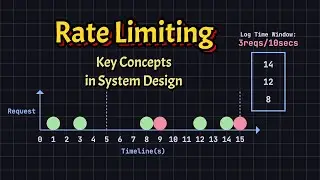
Five Rate Limiting Algorithms ~ Key Concepts in System Design
In modern computer systems, rate limiting is an essential technique that helps prevent system overloads and ensures stable service, especially in high-traffic situations. For example, during a flash sale on an e-commerce website, rate limiting can prevent too many users from accessing the system at once and causing it to crash. In API services, rate limiting ensures that the service remains stable by preventing any single user from overloading the system and disrupting access for others. Additionally, rate limiting algorithms are common topics in technical interviews, testing a candidate’s understanding of traffic management and system performance optimization.
In this video, we will explore five common rate limiting algorithms: the Leaky Bucket Algorithm, the Token Bucket Algorithm, the Fixed Window Counter Algorithm, the Sliding Window Log Algorithm, and the Sliding Window Counter Algorithm. By learning these algorithms, you’ll gain insights into how to choose the right rate limiting strategy based on your system’s needs, enabling efficient traffic management.
00:00 - Intro
01:11 - Leaky Bucket Algorithm
03:53 - Token Bucket Algorithm
07:07 - Fixed Window Counter Algorithm
11:15 - Sliding Window Log Algorithm
14:00 - Sliding Window Counter Algorithm
16:40 - Outro
Hashtags:
#systemdesign #bytevigor #ratelimiting #api
On this page of the site you can watch the video online Five Rate Limiting Algorithms ~ Key Concepts in System Design with a duration of hours minute second in good quality, which was uploaded by the user Hello Byte 16 September 2024, share the link with friends and acquaintances, this video has already been watched 45,930 times on youtube and it was liked by 1.6 thousand viewers. Enjoy your viewing!