collision vs. broadcast domain: Hub, Switch and Router
In an Ethernet network, a collision domain is a group of nodes that hear each other. When one node is talking, everyone is listening. When one node is using the hub, all other nodes must wait. Collision occurs when two nodes send signals at the same time. Thus, hub would create a collision domain.
If the collision domain gets too large, you’ll start running into traffic problems. If you try to daisy chain or cascade some hubs, you actually expand the collision domain.The more hubs we use on a local network, the larger collision domain we create.
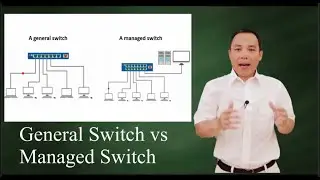
A switch is much smarter than a hub because it gives every conversation the full bandwidth of the network. When node A is talking, only its receiver B can hear. When node C is talking, only its receiver D can hear. Now communications on a network become one-to-one conversations. If A and B are talking at the same time, no collision would occur. Thus, switch separates the collision domain.
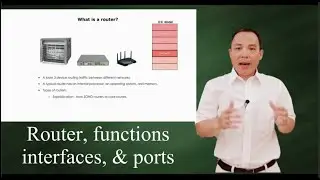
Router operates at layer 3, or the network layer of the OSI model. Routers only forward IP packets based on IP address. Routers not only separate collision domains, but also separate broadcast domains.
This is my education channel. My topics cover networking, security, programming, and other computer-related materials.
Please subscribe my channel. Many thanks.
En esta página del sitio puede ver el video en línea collision vs. broadcast domain: Hub, Switch and Router de Duración hora minuto segunda en buena calidad , que subió el usuario Sunny Classroom 02 marzo 2018, comparta el enlace con amigos y conocidos, en youtube este video ya ha sido visto 190,011 veces y le gustó 4.6 mil a los espectadores. Disfruta viendo!